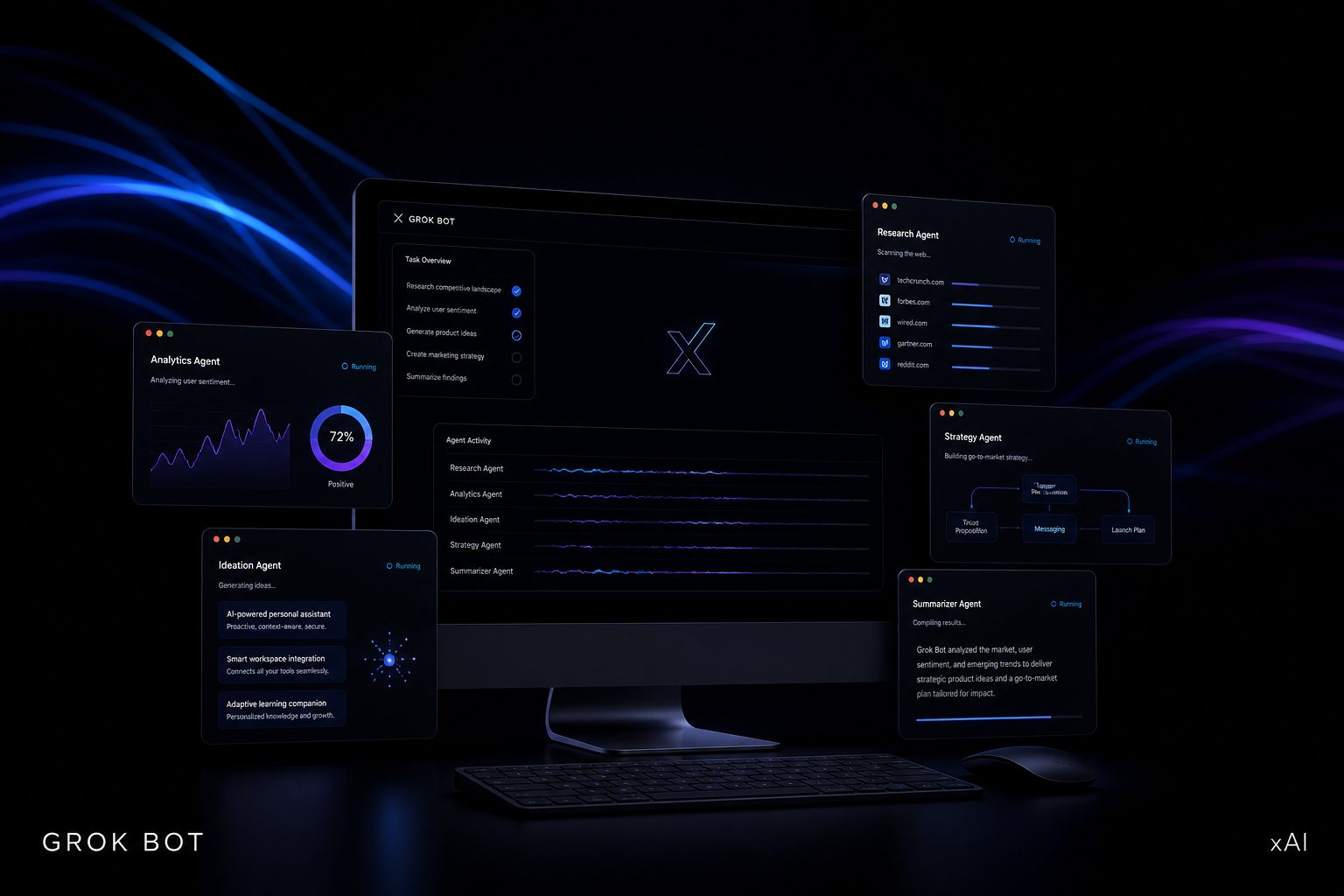
Grok Bot by xAI — agentic AI with a real computer, not just a chat box.Logo © xAI / Grok. Used here for editorial identification only — Atlas AI is not affiliated with or endorsed by xAI.
Grok Bot is the clearest signal yet that AI has moved from “answer my question” to “do the work.” That shift—agentic AI with real computer access—is the dominant 2026 trend, and it matters whether you run an MSP, an IT shop, or any operations-heavy small business.
What Grok Bot actually is
xAI launched Grok Bot (@bot) in early beta in mid-August 2026. It is not the same as conversational Grok in a chat window.
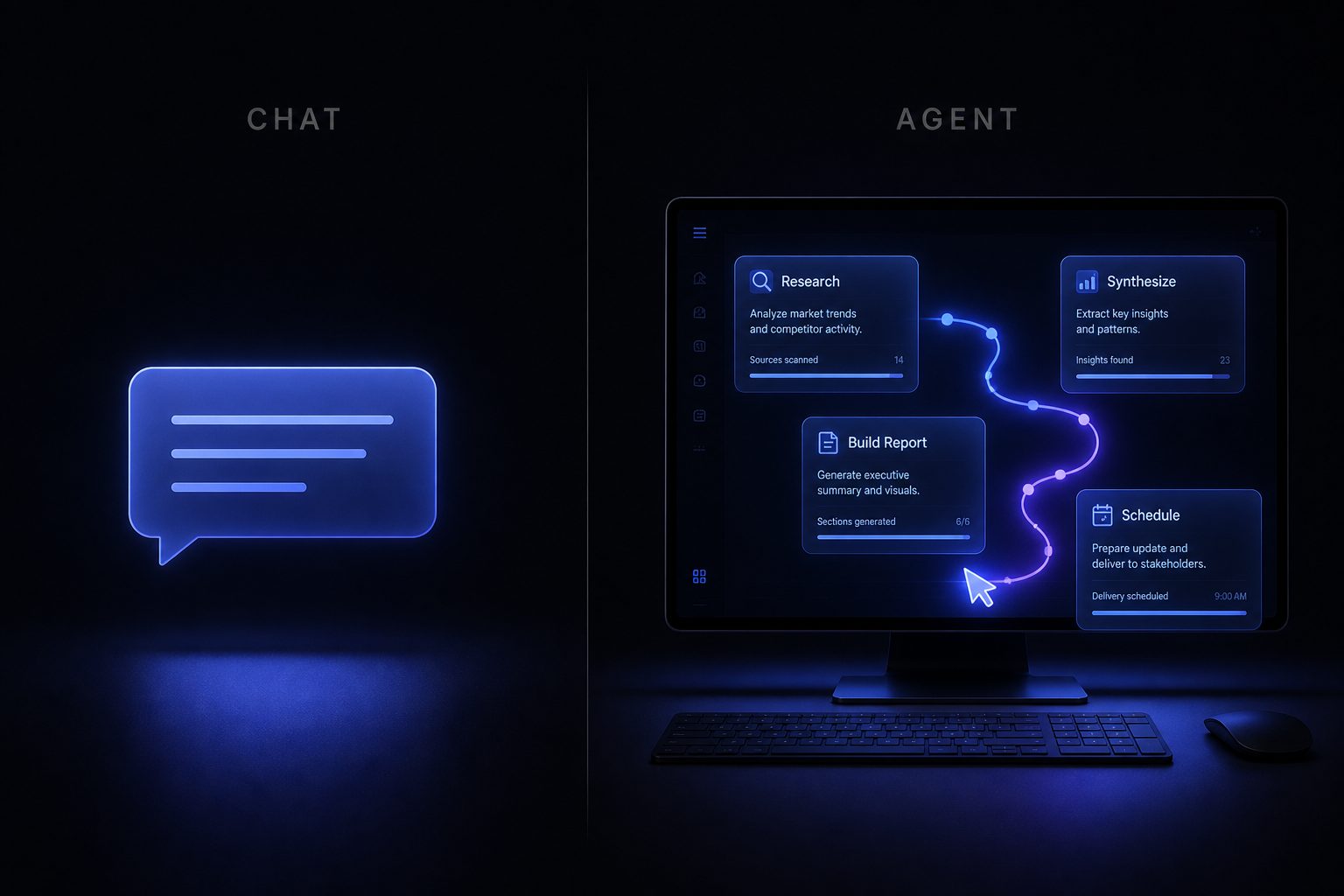
Each bot gets its own cloud computer. It logs into your actual tools the way a person would, runs multi-step work, and only comes back when it needs a decision or approval. You can run several in parallel. SuperGrok and Cursor Pro users now have access; limits were recently reset.
In plain terms: this is a computer-use agent—the category we described in What is an agentic workflow?—packaged as a teammate you talk to, not a prompt you engineer.
What people on X are actually saying
Power users call it one of the first agents that “just works” for knowledge work: research, draft, monitor, and follow-up without constant babysitting.
Standout examples people report:
- Compiling and editing video compilations from dozens of sources in minutes
- Overnight sales research and outreach drafts
- 24/7 community monitoring
- Bug hunting and pull-request drafting
- Content repurposing across channels
Praise centers on the persistent computer plus a simple teammate UX. You talk to it like a colleague, not a prompt engineer.
Critiques are worth taking seriously:
- Still early beta; the current model is not always the strongest on every task
- Vendor lock-in risk if your workflows live only inside one platform
- Without clear ownership, quality bars, and authority limits, it can create more cleanup than it removes—some call it a “poisoned gift” if you do not control the stack
Elon’s line is the product pitch in one sentence: try it; if it messes up they will make you whole. For a business buyer, the better question is whether your process and your governance can make the agent reliable before you scale it.
The bigger 2026 picture
Agentic systems are the main enterprise story this year—not bigger chat windows.
- Gartner projects 40% of enterprise apps will include task-specific agents by end of 2026 (from under 5% the year before). Multi-agent orchestration is next.
- Computer-use agents (log in, click, type, read screens) are moving from demos into production workflows.
- Most companies still struggle to get value: data readiness and process design beat model choice. Many agent projects will be canceled without governance.
- Inference spend and infrastructure continue to dwarf application spend. Winners turn agents into reliable teammates, not science projects.
Grok Bot’s differentiator is pragmatic: it does not require an API for every tool. If a human can log in and use it, the bot can too. That matters for legacy consoles, vendor portals, and the messy stack most businesses actually run—the same “meet your stack where it is” idea we cover in putting AI in the tools you already pay for.
What this means for MSPs, IT shops, and operations teams
Treat this as a new labor category, not a better chatbot.
High-leverage first uses
- Overnight research + draft — sales, recruiting, vendor follow-up
- Recurring ops — expense summaries, account health signals, weekly status from Slack, email, and calendar
- QA and reproduction — bugs, config drift, “click the path and screenshot it”
- Monitoring + alerting on tools that lack good APIs
Do not start with “replace a person.” Start with one repeatable workflow you already do weekly.
Define three things before you turn anything on:
- What the bot owns — the exact job, inputs, and outputs
- What good looks like — sample outputs, error rate you will accept, who reviews
- Where authority stops — spend, delete, send, change production
That last rule is the difference between leverage and cleanup. It is the same guardrail logic we use when we design agentic workflows for clients: scoped access, approval gates, and a full audit trail.
Apple and Jamf environments
The interesting angle is not “Grok replaces Jamf.” It is using an agent that can work the web consoles, Apple Business Manager, tickets, and docs the same way your techs do—then feeding results into systems you already trust (n8n, Autotask, your PSA, and so on).
If your shop is Apple- and Jamf-heavy, pair any agent pilot with the identity and device rules you already enforce. Shadow agents are shadow AI with extra horsepower.
Governance beats model hype
Gartner’s warning lands in real assessments: agent projects fail when nobody owns outcomes.
Before you add a second bot, put the boring paperwork in place:
- A short AI policy — what is encouraged, what needs human review, what is off limits
- An AI security review — which accounts the bot uses, what data it can touch, where logs live
- Training for the human who still owns the result—not “how to prompt,” but “how to supervise an agent”
We have seen policy rollouts like this work when policy, technical controls, and staff training ship together—not when legal sends a PDF and IT hopes for the best. Our AI policy case study walks through that pattern.
Practical next step this week
If you have SuperGrok or Cursor Pro, give one bot a single, bounded job: research + draft + review list. Measure time saved and error rate. Then decide whether a second specialist bot is worth it.
The companies that win the next 18 months will not be the ones with the most AI seats. They will be the ones that give agents clear jobs, tight permission boundaries, and a human who still owns the outcome. Grok Bot is just the latest, most visible version of that shift.
Quick answers (for search and skimming)
What is Grok Bot? An xAI beta agent with its own cloud computer that logs into tools like a human and runs multi-step work, pausing for approval when needed.
Is Grok Bot the same as Grok chat? No. Chat answers questions. Grok Bot acts inside applications and can run several parallel jobs.
Who can access Grok Bot today? SuperGrok and Cursor Pro subscribers in early beta (as of August 2026).
What should a small business automate first? One weekly workflow—research drafts, status summaries, or monitoring—not a full role replacement.
How do you keep agentic AI safe? Define ownership, quality bars, and hard stops on spend, send, delete, and production changes—then back it with policy and security review.
Want a second set of eyes on which workflow to pilot first? Book a free AI Readiness Call—we will tell you honestly whether an agent fits, or whether a simpler integration is enough for now.